
In today’s rapidly evolving healthcare landscape, the integration of RFID technology in mobile medical devices represents a significant leap forward in ensuring cybersecurity and operational efficiency. Recent events highlight the ongoing need for enhanced security. Investigations into cyberattacks, such as the one on Change Healthcare, underscore the vulnerabilities in the healthcare sector. The Biden administration’s focus on protecting sensitive data through executive orders, and the operational disruptions faced due to ransomware attacks, as reported by NPR, emphasize the critical role of advanced technologies like RFID in safeguarding healthcare systems and enhancing patient care.
The Emergence of Mobile Medical Devices
The advent of mobile medical devices has dramatically reshaped the way healthcare is delivered, offering unprecedented convenience and efficiency. These devices range from vital signs monitors and mobile ECGs to infusion pumps and patient lifts, and they are increasingly becoming essential tools in modern healthcare practices. However, their mobility and extensive connectivity open up new avenues for cybersecurity threats. This has prompted a growing emphasis on the need for robust security solutions.
RFID technology has emerged as a pivotal solution to these challenges. By integrating RFID into mobile medical devices, healthcare providers can ensure secure access and enhance the tracking capabilities of these devices, gaining a sophisticated level of control over them. This integration not only fortifies the security of sensitive patient data and healthcare networks but also bolsters the overall efficacy and safety of the medical devices.

The use of RFID in healthcare goes beyond basic security; it facilitates streamlined operations, enhances patient care, and mitigates the risk of data breaches or unauthorized access. As the healthcare sector continues to evolve, the adoption of RFID technology in mobile medical devices is proving to be a key step in safeguarding both patient well-being and the integrity of healthcare systems.
Impact of RFID on Point of Care
The profound impact of RFID technology in the patient care realm extends to its application in various medical devices used at the point of care. This technology not only enables real-time tracking and efficient management of medical equipment but also ensures their availability, thereby enhancing the quality of patient care and reducing potential errors. Here are some key medical devices that are increasingly utilizing RFID technology:
- Vital Signs Monitors: Enhanced patient monitoring and data accuracy.
- Patient Lifts: Improved safety and handling.
- Mobile ECGs: Secure and efficient cardiac monitoring.
- Infusion Pumps: Accurate medication dosage tracking and control.
- Portable Ultrasound Machines: Simplified tracking and maintenance.
- Mobile X-Ray Machines: Efficient location and usage monitoring.
- Automated Medication Dispensers: Controlled access and precision in dispensing.
- Wheelchairs: Effective tracking and management within the facility.
- Hospital Beds: Monitoring of patient occupancy and resource allocation.
- Surgical Instruments: Ensured sterilization and usage tracking.
With RFID, healthcare providers can streamline their workflows, enhancing the overall efficiency of patient care services, while also adhering to the highest standards of safety, accuracy in treatment and healthcare cybersecurity.
Key Benefits of RFID in Healthcare
RFID technology offers numerous benefits in a healthcare setting:
- Enhancing Patient Safety: RFID can track patient movement and monitor treatment, ensuring that patients receive appropriate care and reducing the risk of errors.
- Tracking Mobile Device Access and Maintenance: RFID enables hospitals to monitor who accesses devices and when, providing a clear audit trail for maintenance and use.
- Streamlining Inventory Management: With RFID, hospitals can effectively manage their inventory, ensuring that necessary equipment and supplies are always available.
- Boosting Operational Efficiency: RFID technology automates many processes, allowing staff to focus on patient care rather than administrative tasks.
Addressing Challenges and Healthcare Cybersecurity Concerns

While RFID offers substantial advantages in healthcare, it raises important questions about privacy and data security. Ensuring that RFID systems are not only secure but also compliant with stringent regulations, such as the Health Insurance Portability and Accountability Act (HIPAA), is vital for maintaining patient confidentiality. This includes implementing robust encryption and authentication protocols to safeguard data transmitted by RFID systems. Additionally, managing the risk of unauthorized access to RFID-enabled devices is a key concern. It requires continuous vigilance and updates to security measures to counter evolving cyber threats. Balancing the technological benefits of RFID with these privacy and security considerations is essential for its successful and ethical application in healthcare.
Case Study: Real-World RFID for Healthcare Cybersecurity Applications
The case study of a premier east-coast academic medical center offers an insightful example of RFID technology addressing real-world challenges in healthcare. This leading teaching hospital in New York City, recognized the limitations of its existing RFID access badge system, which was primarily focused on security access. To enhance their security measures and manage over 93,000 annual patient admissions more effectively, the hospital sought to integrate both security access and device access systems. This initiative aimed to create a unified access solution through a single badge, streamlining workflows and supporting the hospital’s digital transformation. The hospital’s collaboration with JADAK was pivotal in achieving these goals, showcasing the potential of RFID technology in improving healthcare operations and security. Read the full technical case study.
Looking Ahead: The Future of RFID in Healthcare
Looking ahead, the potential of RFID in healthcare is vast and continually evolving. As the technology advances, we can anticipate novel applications that will further revolutionize patient care and hospital management. Future iterations may see RFID systems not only enhancing security but also integrating with AI for predictive analytics, contributing to telemedicine, and improving patient engagement. Healthcare providers who embrace these RFID advancements will be at the vanguard of a significant shift in medical care, ensuring heightened security, efficiency, and quality of patient services in an increasingly digital world.
JADAK Expedited RFID Solution for Healthcare Cybersecurity
Drawing from JADAK’s decades of expertise in RFID customization and plug-and-play solutions, the company was ideally positioned to address the hospital’s need for the creation of new functionalities that would seamlessly integrate with existing third-party systems. Moreover, JADAK provided an end-to-end solution, encompassing custom development, configuration, installation, manufacturing, and lifecycle management.
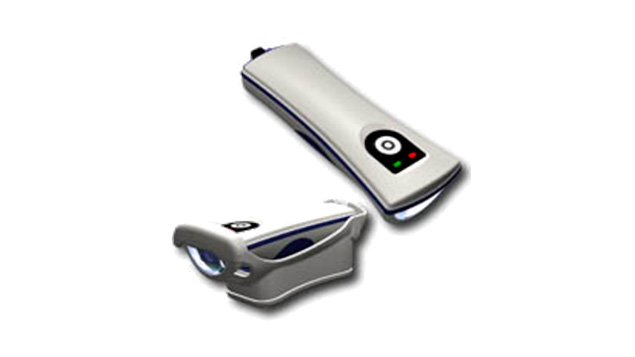
One of JADAK’s standout offerings in this endeavor is the Flexpoint HS-1RS, part of the Flexpoint HS-1
Handheld Barcode and RFID Scanner Series. The HS-1RS stands as the latest and most advanced in the
series, and it holds the distinction of being the only healthcare-ready handheld scanner available today that seamlessly combines 1D/2D barcode scanning with high frequency (HF) and low frequency (LF) RFID
reading capabilities, all within a single, ergonomic, and compact design. Equipped with cutting-edge
Imprivata software, it excels in reading various types of contactless or smartcards, as well as prox cards,
providing secure user authentication that aligns with FDA and the Healthcare Cybersecurity recommendations for robust authentication and patient information protection.